
Kratky Strawberry Guide
Harvesting and Using Kratky Strawberries
The payoff for weeks of topping up and hand-pollinating is fruit. This guide covers when to pick, how to keep the berries at their best and a few simple ways to use them.
When to Pick
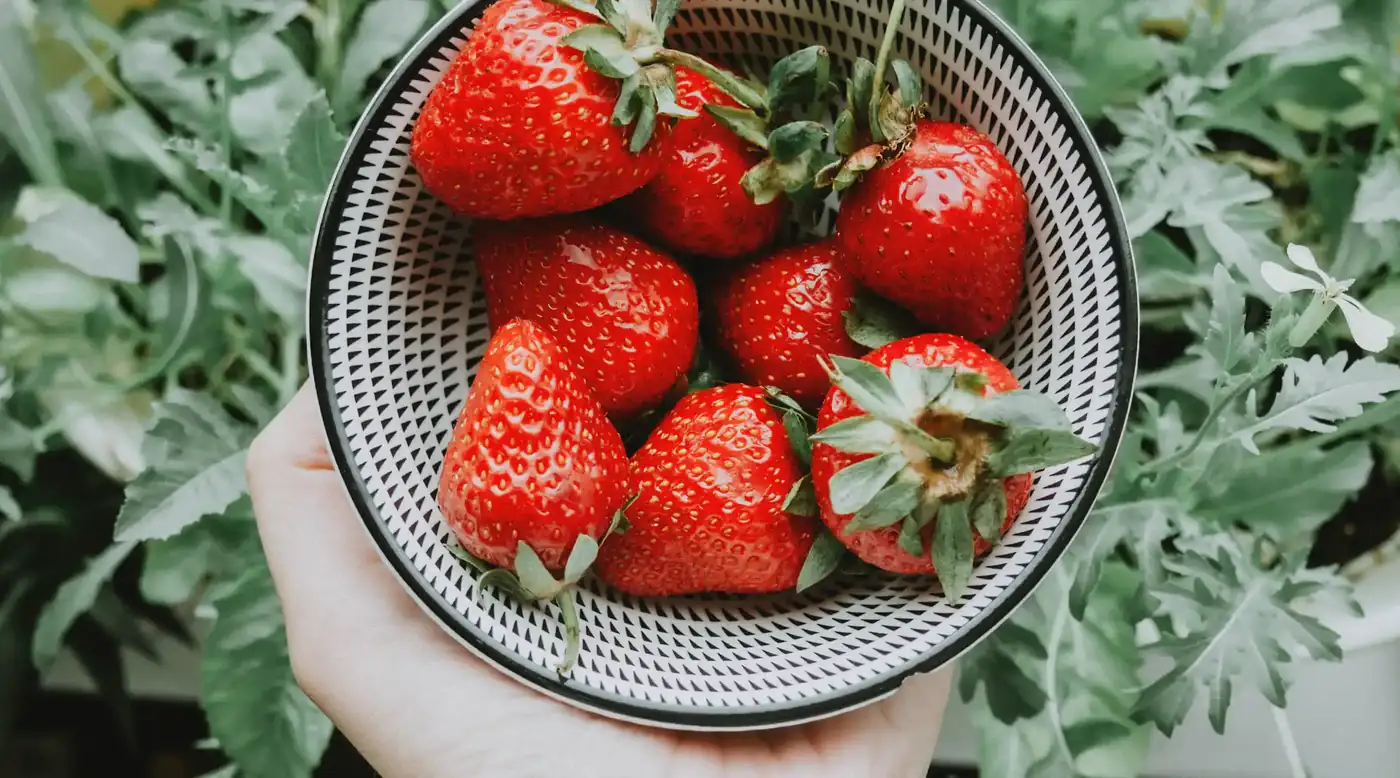
Pick when the berry is fully red right up to the shoulders around the cap. Strawberries do not get any sweeter once they are off the plant, so a berry picked white-shouldered stays that way.
- Check the plant every day or two once fruit is coloring. A ripe berry can soften quickly on the plant, especially in a warm room.
- Pick in the cool of the morning if you can.
- Remove damaged or moldy berries as soon as you see them so they do not spread rot to the rest.
How to Pick
Hold the stem just above the berry and pinch or snip it, leaving the green cap and a short piece of stem on the fruit. Pulling on the berry itself bruises it and can tug the plant in its net cup. Keeping the cap on also helps the berry last longer.
Storing Your Harvest
- Do not wash berries until just before you eat them. Moisture speeds up mold.
- Store them unwashed in a single layer in a container lined with paper towel, in the refrigerator.
- Eat them within a few days. Home-grown berries picked fully ripe are softer than supermarket fruit.
- Let them come up to room temperature before eating for the best flavor.
Sugared Strawberries
The simplest way to make a small harvest go further.
- Rinse, hull and slice about 2 cups of strawberries.
- Sprinkle over 1 to 2 tablespoons of sugar and stir gently.
- Leave for 20 to 30 minutes, stirring once, until the berries release a syrup.
Spoon over yogurt, ice cream, pancakes or shortcake.
Quick Strawberry Sauce
- Put about 2 cups of hulled, halved strawberries in a small saucepan with 2 to 3 tablespoons of sugar and 1 tablespoon of lemon juice.
- Simmer over medium-low heat for 8 to 10 minutes, stirring and pressing the berries, until softened and slightly thickened.
- Cool and store in a covered jar in the refrigerator for up to a week.
Slightly soft or misshapen berries are ideal for this.
Freezing Strawberries
- Rinse and dry the berries thoroughly, then remove the caps.
- Spread them in a single layer on a tray lined with baking paper and freeze until solid.
- Transfer to a freezer bag or container, pressing out the air.
Freezing them separately first stops them freezing into one block. Frozen berries are best for smoothies, sauces and baking rather than eating whole.
How Much Fruit to Expect
A strawberry plant in a Kratky container will not crop like a commercial field, and it helps to know that going in. Day-neutral varieties fruit in flushes: a wave of flowers, a wave of berries a month or so later, then a pause before the next wave. A single plant might give you a small handful of berries every week or two at its peak. Several plants in a tote or a few buckets turn that into a regular supply. The biggest factors are light, steady care of the solution and good pollination. Indoor plants that are hand-pollinated thoroughly give noticeably more and better-shaped berries.
Picking Through the Season
Ripe berries left on the plant soften, attract mold and slow the plant down. Picking regularly does the opposite.
- Pick every ripe berry, including small or misshapen ones, so the plant moves its energy to new fruit.
- Cut off any berry with gray fuzz immediately and throw it away, not into the container.
- Keep the fruit off the lid. Berries resting on a damp lid rot from underneath. A strip of clean card or a small support under the trusses helps.
- Top up and check the nutrient strength more often while the plant is carrying fruit, since water use is at its highest.
Why Home-Grown Berries Taste Different
Commercial strawberries are often picked before they are fully ripe so they survive shipping. A berry picked fully red from your own plant has had longer to build sugar and aroma. Flavor also depends on the variety and the light: plants in strong light produce sweeter fruit. If your berries are pale-tasting, more light is usually the answer. The lighting guide explains how much they need, and the varieties guide points to the sweetest choices.
Other Ways to Use a Harvest
- Fresh: sliced over cereal, oatmeal or salad.
- Blended: in smoothies or milkshakes, especially frozen berries.
- Baked: in muffins, a crumble or a simple tart.
- Infused: a few sliced berries in a jug of water in the refrigerator.
After the Last Flush
When a plant stops flowering for a long stretch, or its berries keep getting smaller, it is near the end of its productive life. You can root a runner from it as a replacement, then empty the container, wash the net cups and clay pebbles, and start again with fresh solution. The strawberry plants guide covers how long a plant stays productive.
More Kratky Strawberry Guides
This guide is one of a set covering each part of growing strawberries with the Kratky method, from choosing a container to solving problems.