
Kratky Strawberry Guide
Nutrients for Kratky Strawberries
In a Kratky container the nutrient solution is the only food the plant gets. This page covers what to use, how strong to mix it and how to manage it over a long strawberry season.
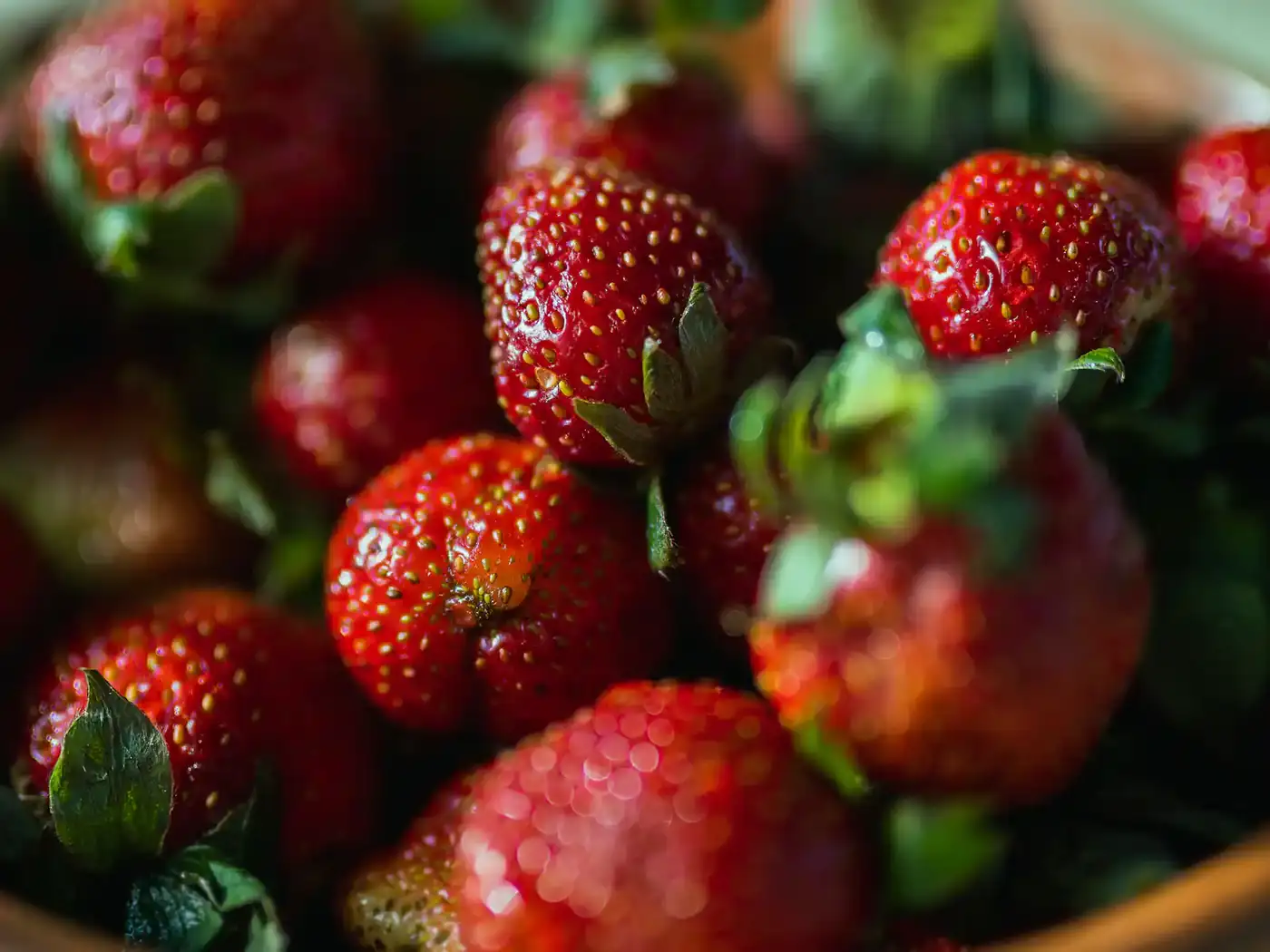
Use a Hydroponic Nutrient
Garden fertilizers assume the soil will supply part of what a plant needs. In water there is no soil, so the nutrient has to be complete: nitrogen, phosphorus and potassium, plus calcium, magnesium and trace elements such as iron.
Any complete hydroponic nutrient will grow strawberries. Many Kratky growers use a dry three-part recipe made of a fruiting-crop formula, calcium nitrate and Epsom salt, because it is inexpensive and keeps well. Bottled liquid nutrients are easier to measure and work just as well.
How Strong to Mix It
Strawberries are sensitive to salt, so they prefer a weaker solution than tomatoes or peppers.
- Young plants: start at about half the strength on the label.
- Established plants: many growers run an EC of roughly 1.0 to 1.5 mS/cm.
- No meter? Mix at half to three-quarters of the label rate and watch the plant.
Brown, crisp leaf edges are the usual sign the solution is too strong.
Why Strength Drifts
Plants take up water faster than they take up nutrients, and water also evaporates. In a container that is never drained, the remaining solution gets steadily more concentrated as the level falls. This is the main reason strawberries in Kratky containers need more attention than lettuce.
Topping Up
- Top up with plain water or a weaker mix, not full-strength solution, so the concentration comes back down.
- If you have an EC meter, measure before and after and aim for your target range.
- Leave an air gap under the lid every time.
- Every few weeks, empty the container and start with fresh solution. This resets both the strength and the balance between nutrients.
Water Quality
Most tap water works. Very hard water raises pH and adds its own minerals, so you may need more pH adjuster. If your tap water is heavily chlorinated, letting it stand overnight before mixing helps.
What Strawberries Need Most
Every complete hydroponic nutrient supplies the same set of elements. A few of them matter especially for strawberries.
- Nitrogen drives leaf growth. Too much, especially late in the season, gives lush leaves and fewer, softer berries.
- Potassium supports flowering, fruit size and flavor. Fruiting-crop formulas carry more of it.
- Calcium builds firm cell walls. A shortage shows as scorched, crinkled tips on the newest leaves, often called tip burn, and soft fruit.
- Magnesium keeps leaves green. A shortage shows as yellowing between the veins of older leaves.
- Iron is needed in small amounts. It becomes unavailable when the pH runs high, causing yellow new leaves with green veins.
- Boron is needed in tiny amounts for pollination and fruit shape.
You do not need to dose any of these separately. A complete nutrient supplies them all in balance. Problems almost always come from the strength or the pH, not from a missing element.
Growth Formulas and Fruiting Formulas
Some nutrient lines sell a "grow" formula with more nitrogen and a "bloom" or fruiting formula with more potassium and phosphorus. For strawberries, which flower and fruit for most of their lives, a single fruiting-crop formula used throughout is the simplest choice. If you have both, use the grow formula only for the first few weeks after planting, then switch.
Measuring Strength Without Guesswork
An inexpensive EC meter is the most useful upgrade for a strawberry grower. It shows the overall strength of the solution, so you can tell whether a top-up should be plain water or nutrient. Our post on EC for Kratky strawberries gives target readings by growth stage and explains the difference between EC and ppm. Without a meter, mix at half to three-quarters of the label rate and judge by the plant: brown, crisp leaf edges mean too strong, and pale, slow growth can mean too weak.
Mixing Tips
- Add nutrients to the full volume of water, not the other way round.
- Stir until the solution is completely clear before adding the next part.
- Use room-temperature water. Very cold water dissolves powders slowly.
- Adjust pH last, after everything is mixed in. The pH guide explains how.
- Label any spare mixed solution with the date and use it within a couple of weeks.
Storing Nutrients Safely
Keep dry nutrients sealed, dry and out of reach of children and pets. Moisture makes powders cake and calcium nitrate in particular absorbs water from the air. Liquid nutrients keep best in a cool, dark cupboard. Never store nutrients or mixed solution in old drink bottles, where someone could mistake them for something to drink.
Related Articles
More Kratky Strawberry Guides
This guide is one of a set covering each part of growing strawberries with the Kratky method, from choosing a container to solving problems.