
How Long Do Kratky Strawberries Take to Fruit?
From a bare-root plant, expect the first flowers in roughly two to three months and ripe fruit about four to six weeks after each flower opens. Plugs are quicker. Seed takes much longer.
A Rough Timeline
- Weeks 1 to 2: a bare-root plant wakes up and puts out its first leaves.
- Weeks 3 to 8: roots grow down into the container and the plant builds leaf.
- Months 2 to 3: day-neutral and everbearing varieties begin to flower.
- Four to six weeks after flowering: fruit ripens.
These are typical figures, not promises. Light and temperature move them a good deal.
By Starting Material
- Plugs: already in leaf, so often a few weeks ahead of bare-root plants.
- Bare-root: as above.
- Seed: usually five months or more before the first fruit.
What Slows It Down
- Low light is the most common cause of delay.
- Heat stops many varieties flowering.
- pH out of range starves the plant even in good solution.
- Transplant shock, especially in plants moved from soil.
- A June-bearing variety, which fruits once a year on its own schedule.
Should You Remove the First Flowers?
Some growers pinch off the first flush so the plant puts its energy into roots and leaves, which tends to give a stronger plant and better harvests later. If you are impatient, leaving them does no lasting harm to a healthy plant.
How Long It Keeps Going
Once started, a day-neutral plant fruits in flushes for many months. Yield and berry size usually decline as the plant ages, and many growers replace plants after a season.
From Flower to Ripe Berry
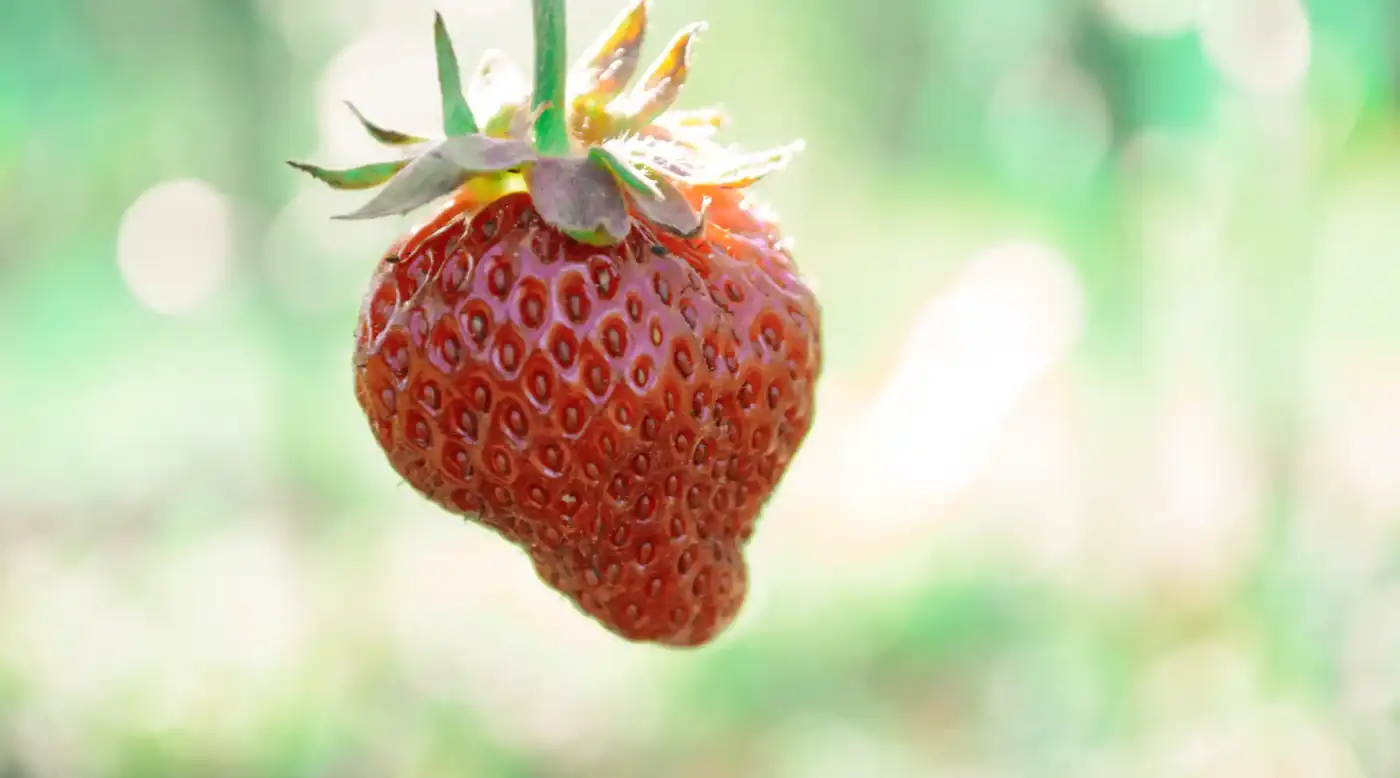
Once a flower has been pollinated, the petals fall within a few days and a small green berry appears at the center. Over the next few weeks it swells, turns white, then blushes pink and finally deep red. The whole process usually takes four to six weeks. It runs faster in warm conditions and slower in cool ones. A berry is ripe when it is fully red right up to the cap. Strawberries do not ripen further once picked, so leave them until they are fully colored. Our harvesting guide explains how to pick them without bruising.
What Speeds It Up
- Strong light: 6 to 8 hours of direct sun, or 12 to 16 hours under a grow light.
- Moderate warmth: about 60 to 80°F (15 to 27°C). Plants in a cool room grow slowly.
- A healthy start: a firm bare-root crown or a vigorous plug.
- The right solution: correct strength and a pH between 5.5 and 6.5 from day one.
- Thorough pollination: indoors, flowers that are not pollinated never become fruit at all.
Day-Neutral, Everbearing and June-Bearing Timing
Day-neutral varieties such as Albion and Seascape are the quickest route to fruit in a container, because they flower whenever temperature and light allow. Everbearing varieties behave similarly, with a couple of stronger flushes in the season. June-bearing varieties are different: they form flower buds in the short, cool days of autumn and fruit once, the following spring or early summer. A June-bearer planted in late spring may not fruit until the next year. The varieties guide compares the types.
A Season Month by Month
For a bare-root day-neutral plant set out in early spring, a typical season might look like this:
- Month 1: new leaves appear and roots reach down into the solution.
- Month 2: the plant fills out and the first flower stalks may appear.
- Month 3: flowering gets going. Hand-pollinate indoors.
- Month 4: the first ripe berries.
- Months 5 onward: flushes of flowers and fruit every few weeks while conditions stay favorable.
Every growing space is different, so treat the months as a guide rather than a deadline.
When Nothing Is Happening
If a plant is three or four months old with healthy leaves and no flowers, work through the usual causes. Light is the most common, followed by heat, a June-bearing variety, and a pH that has drifted out of range. A plant that flowers but sets no fruit is usually short of pollination. The Kratky strawberry problems guide covers each of these.
Getting More From a Plant
Cutting off runners keeps the plant's energy on fruit. Picking ripe berries promptly encourages more flowers. Removing old, yellowing leaves keeps the crown clean. And keeping the air gap open protects the roots that the whole harvest depends on. Our post on cutting strawberry runners explains when and how to remove them, and the strawberry plants guide covers how long a plant stays productive.
Quick Answers
Can I get fruit in the first year? Yes, with day-neutral or everbearing varieties. June-bearers often fruit the following year.
Do plugs fruit faster? Usually by a few weeks, since they are already growing.
Related guide: What to expect from a strawberry plant.